Wednesday, June 17, 2009

Can Google's Android challenge the iPhone?

The Informa research company has predicted that smart phones using Google's Android (Linux-based) software will overtake Apple iPhone sales by 2012, according to reports. One reason will be familiar to anyone who knows the history of the computer industry. Android phones will probably be available on hundreds of handsets from dozens of manufacturers on most or all of the world's mobile phone networks, whereas iPhones will probably be available from one manufacturer, and possibly on only one network in each country.

It's this kind of widespread availability at a variety of prices on a range of networks that has so far kept sales of smart phones based on Microsoft Windows Mobile ahead of iPhone sales, though you'd never believe it from the press coverage. (And, I might add, it's going to change very soon.)

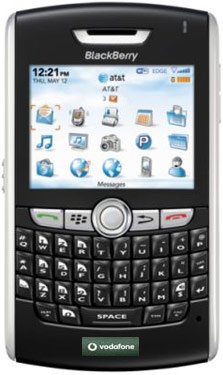
Gartner released some smart phone market figures this week. The company puts Symbian-based phones well ahead in 08Q4, selling 17.9m handsets for a market share of 47.1%. It's followed by Research In Motion (7.4m, 19.5%), Microsoft Windows Mobile (4.7m, 12.4%), Apple OS X (4.1m, 10.7%) and Linux (3.2m, 8.4%).

"Gartner estimated that Android smartphones accounted for 20% of total Linux sales in the fourth quarter of 2008." It's a start....

The basic story is that, compared with the same quarter in 2007, Nokia is losing market share (-21.6%), while Apple (111.6% growth) and RIM (84.9%) are catching up fast.

Over the full year, Gartner reckons Nokia sold 61m smart phones, followed by RIM (23m), Apple (11m), HTC, (6m) and Sharp (5m). Total sales of smart phones came to 139.3m, out of total mobile phone sales of 1.22 billion. On this basis, the iPhone managed to take just 0.9% of the mobile phone market, though no doubt a much higher percentage of the profits.

Gartner says that 08Q4 was the lowest growth rate for the smart phone market, at 3.7%, compared with 13.9% growth for the full year. However, any growth could be considered good in tough times, and there is clearly a move towards smart phones as they become more capable and more versatile. It should therefore be reasonably safe to predict further growth for Apple iPhone and RIM sales in particular.

But the smart phone market is not easy to call. Unlike the PC market, there is very little to keep people using one operating system. Users can easily switch from Symbian to Android, or vice versa, and they may not even notice.

Another major factor is the appeal of particular handsets. If everyone wants a RAZR, Motorola's sales boom, and if no one wants a RAZR, it's a bust. And as the success of the iPhone has shown, the desirability of the handset can overcome limitations in both the software and the network.

And one thing we don't know is which companies will have really attractive handsets in another five or 10 years. It might be Apple, Nokia, HTC, Palm, or a company we've not heard of, which might not even exist yet. Not many, if any, pundits were predicting in 1998 that Apple would be king of mobile phone handsets a decade later -- or even that it would enter the market for portable MP3 players.

I shall therefore avoid predicting Android's ultimate victory until after it's happened.
Read rest of entry

Sunday, June 14, 2009

SONY INTRODUCES NOTEBOOKS WITH PERSONAL STYLE

Designed to express your personality, Sony Electronics today took the wraps off a new line of slim notebooks in five hip colors.

With slick lines, and a chic design, the VAIO®C Series notebook line is a functional fashion statement merging portability, power and style.

Just like clothing styles, the VAIO C Series reflects individuality with such color offerings for the casing as seashell white, blush pink, spring green, espresso black and urban gray. Complementary colors frame the touchpad of the unit and accentuate the casings, while a dimpled texture adorns the palm rest of the PC.

Backed by an Intel® Core™ 2 Duo processor, the VAIO C model also has plenty of power for high-speed computing and an energy-efficient battery life so you can enjoy games, music and movies longer— while away from home. The unit is Windows Vista™ capable and Windows Vista Premium ready.

“Today’s PC users demand individuality,” said Mike Abary, vice president of VAIO product marketing for Sony Electronics in the United States. “You exude style and take pride in your taste, so why buy a notebook that looks like all the rest? These new PCs reflect who you are, separating you from the crowd, while helping you get the job done.”

Freedom and Flexibility

Weighting in at about five pounds, the VAIO C notebook’s lightweight design makes it portable enough to take anywhere. And the model’s integrated 802.11a/b/g wireless LAN capabilities will be sure to keep you connected at hotspots and wireless networks – send e-mail from the sofa, share photos while lounging by the pool, or chat with friends from a Starbucks, campus or airport (Wi-Fi connection required).

The model also serves as a well-equipped home theater away from home. It features a 13.3-inch widescreen display (measured diagonally) with Sony’s original energy-saving XBRITE-ECO™ LCD technology and an onboard DVD±R Double Layer/DVD±RW/-RAM drive, so you can enjoy your favorite DVDs in brilliant colors and stunning clarity.

You can also easily create, manage and share your photos and home movies with this new model. It comes with an extensive suite of multimedia tools for easy backup of data, photos, music and videos including DVgatePlus™ and Click to DVD® software for creating your own customized DVDs.

Importing and editing digital content is easy too. Simply transfer photos from a device such as your digital camera using Memory Stick Duo™, Memory Stick Pro™ or ExpressCard™ media slots; i.LINK® (IEEE 802.11) or USB ports; or the bundled memory card adapter that accomodates various types of memory cards. Then organize them into albums or create slideshows.

Sony VAIO C Series notebooks in espresso black and urban gray will be available at the end of October at national retailers starting at about $1,350. The exclusive colors of seashell white, blush pink and spring green can be purchased in November online at sonystyle.com or at Sony Style® stores (www.sonystyle.com/retail) in select fashion malls around the country. Pre-orders begin September 29th at www.sony.com/pr/c.
Read rest of entry

Puzzle games for the iPhone

Puzzle games and the iPhone and iPod Touch go together like peas and carrots (and they're nearly as good for you). They fit beautifully on the small screen, they have no awkward controls to master, and they're ideal when you have 5 minutes or 10 minutes to kill (and don't feel like killing things).

Here's a list of my five favorite puzzle games (so far):

  • Hanoi A beautiful rendition of the classic Towers of Hanoi game. The object is simple: move a stack of disks from one side of the board to the other. There's not much replay value once you master it, but it's fantastic until you do. And, hey, it's free.
  • Nintaii I had no idea what to expect from this game when I won it from AppGiveaway, but it took all of 30 seconds for me to fall in love. Like any good puzzler, this block-rolling, switch-activating brainteaser is easy to learn, challenging to play, and thoroughly rewarding to beat. The full version's on sale for 99 cents, but there's also a Lite freebie.
  • Nintaii is just about the perfect puzzle game: clever, challenging, and fun.

  • Myst The puzzle game to end all puzzle games, Myst is a lush graphic adventure based on the eponymous PC classic. Well worth the $5.99 given the amount of gameplay you'll get from it--and if you can beat it, you're a smarter player than I.
  • Unblock Me One of countless iPhone versions of the beloved Traffic Jam board game, Unblock Me challenges you to remove a red block by sliding other blocks out of the way. The free version gives you 400 puzzles to solve before going on to the 1,600-puzzle full version (which costs of all 99 cents).
  • Twisty Text Lite I love Boggle-style games like TextTwist, which challenge you to build as many words as you can from a set of scrambled letters. Until I can get the real deal, Twisty Text easily satisfies my word-building cravings. It's similar to Free Word Warp, but I like the presentation and input method better.
Read rest of entry

A finger-friendly iGoogle returns to iPhone and Android handsets

Google has been once again revamped its iGoogle start page for easier use on iPhone and Android handsets. It lets you see and interact with your gadgets in a similar fashion to the desktop version, by making use of tabs and displaying content that runs in iFrames. The previous version, which was mysteriously discontinued by Google in late January, simply put everything into one, large vertical stream, and required you to go back and forth to get at different sets of widgets.

One nice feature that was not found in the previous version, is the option to set certain widgets to automatically open and load when you first start iGoogle. Normally you have to open these up for it to pull down the data. Next to this option there are also controls to move them up and down the page which is specific to the mobile site, and will not rearrange the order of your widgets on the desktop.

As far as compatibility goes, the newer iteration of the service handles Ajax better, meaning you can get updates from specific widgets without refreshing the entire page. It's also borrowed a few tricks from the mobile version of the Google News site, allowing you to view and expand news story previews without leaving the page.

There's still the issue of Adobe Flash compatibility though. Widgets that are written in Flash still won't work unless it's supported in your browser, and for Android and iPhone that means you're currently out of luck. That's kind of a bummer considering how many cool Flash widgets there are for iGoogle--especially the games.

When Flash eventually makes its way to both platforms (which will be sooner for Android users), iGoogle has the potential to mirror some of the usefulness found on its desktop counterpart. Even with this update, however, it remains a lightweight, and useful alternative to installing widget-like apps on your phone.


The new iGoogle for iPhone and Android phones has been streamlined from the old one and now supports widgets that take advantage of Ajax, and iFrames.
Read rest of entry

Differences between the iPhone and iPod Touch

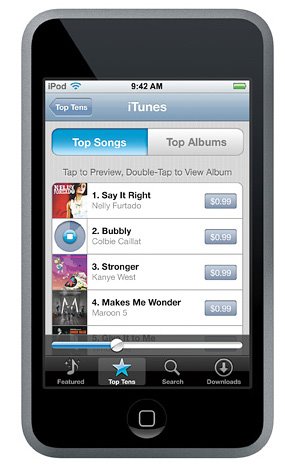
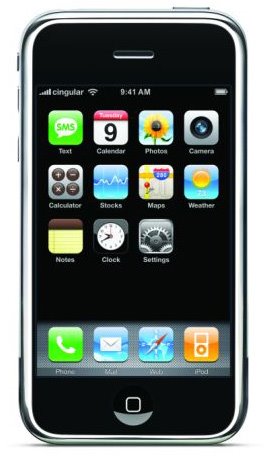
The newly introduced iPod Touch bears striking resemblance to the iPhone, aesthetically and functionally. It uses the same multi-touch screen, apparently runs a scaled down version of OS X that runs Safari and a YouTube application, uses WiFi, has an accelerometer that allows the display to shift based on physical orientation, and uses the same "SpringBoard" interface to launch its applications.

There are, however, some important differences between the devices:
  • There is no email client on the iPod Touch
  • There is no Maps application on the iPod Touch
  • There are no Stocks or Weather widgets on the iPod Touch
  • There is no built-in camera for the iPod Touch
  • There are no Blutooth capabilities for the iPod Touch
  • The iPod Touch has a differently styled "Dock," with a reflective surface -- akin to the Dock that will debut with Mac OS X 10.5 (Leopard)
  • While the iPod Touch is sleeping, the user can tap the home button twice to bring up touch controls on the screen -- a feature the iPhone currently lacks
  • The iPod Touch has a separate Contacts app -- it's built into the Phone application on the iPhone
  • The iPod Touch has separate Video and Music apps, whereas the iPhone has a single "iPod" app that contains these functions
  • There is apparently (and obviously) no microphone on the iPod Touch, though it will be interesting to see if such audio-in capabilities could be enabled via a third-party device.
  • The iPod touch's headphone jack is on the bottom of the device
  • The iPod touch lacks a built-in external speaker
  • The iPod touch's screen appears to be of a slightly higher quality than the iPhone, with 163 pixels per inch to the iPhone's 160 pixels per inch.

We may very well see some of the iPod Touch's enhanced features make their way to the iPhone in a forthcoming software/firmware update. Apple has already announced plans to deliver the WiFi iTunes Store to the iPhone later this month via an update.
Read rest of entry

How to turn your ipod touch into a iphone


Watch the simple video and turn your ipod touch into a iphone
Read rest of entry

On June 19th, Apple announced to Launch iPhone 3G S, $199 16GB, $299 32GB


As expected, Apple introduced the world to the iPhone 3G S this morning during their WWDC 2009 keynote. It looks the same as the current iPhone 3G, glossy back and all, but is much faster. Heck, the S in 3G S stands for “speed” even. We are talking about messaging 2.1x faster, SimCity bring 2.4x faster, viewing an Excel file being 3.6x faster, and loading NY Times being 2.9x faster. Nice!

7.2Mbps HSDPA is now supported in the iPhone 3G S, which means cell connectivity will be twice as fast as well. Aside from speed, you also now have a 3 megapixel camera built-in, which supports autofocus by tapping on an area, as well as auto white balance and auto macro shots. The iPhone 3G S also supports video, which will record at 30fps VGA, and is editable right on the iPhone 3G S. After editing, you can share directly to YouTube, MobileMe, email, or even MMS. You also get a built-in magnetometer compass, Nike+ support, and a very nice voice control feature that will dial people, as well as allow you to control music playback just by talking to the phone.

The iPhone 3G S goes on sale on June 19th, and can be pre-ordered now. It will cost $199 for the 16GB model, $299 for 32GB. These prices only apply to new and end-of-contract customers. If you are a current iPhone 3G customer, you may have to pay up to $599 for the 16GB model, and $699 for the 32GB. Ouch.

with reference: gearlive.com
Read rest of entry
 

Followers

Recommended Gadget

  • ads
  • ads
  • ads
  • ads

The Craze!!!!!! Copyright © 2009 Gadget Blog is Designed by Hiral Vyas